Spectrophotometric and voltammetric assessment of totalflavonoid and phenolic content of Cucurbita species and theirantioxidant activity
Keywords:
Antioxidants, Voltammetry, Spectroscopy, CucurbitaAbstract
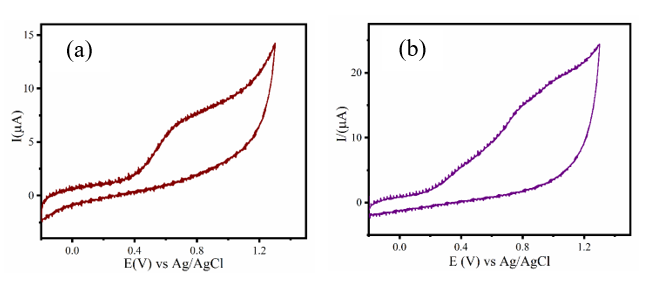
Evaluating the antioxidant properties of edible fruits is central to understanding their potential health benefits. We determined the antioxidant capacity and total phenolic and flavonoid contents of Cucurbita pepo and Cucurbita moschata using cyclic voltammetry and spectrophotometric assays, including 2,2'-diphenyl-1-picrylhydrazyl (DPPH) and ferric reducing antioxidant potential (FRAP). A microwave-assisted method was used for extraction with n-hexane and methanol as solvents. The methanolic extracts produced higher phenolic contents in C. pepo (122.40 μg gallic acid equivalent (GA Eq)/mg) and C. moschata (132.4 μg GA Eq/mg) than the n-hexane extracts. Higher flavonoid levels were found in the methanolic extract of C. pepo (266.7 μg Q Eq/mg) and the n-hexane extract of C. moschata (177 μg Q Eq/mg). The DPPH assay showed higher percentage inhibition of free radicals in the n-hexane extracts of C. pepo (66.732 ± 6.976%) and C. moschata (58.425 ± 5.340%) than in the methanolic extracts. The FRAP assay indicated that the n-hexane extract of C. pepo had higher reducing power (∼98.0%) than the methanolic extract (∼77.5%), whereas the methanolic extract of C. moschata had higher reducing potential (∼106.9%) than the n-hexane extract (∼86.2%). The voltammetric assay showed that C. moschata had higher antioxidant activity (1.13 ± 0.061 μg GA Eq/mg and 4.19 ± 0.10 μg ascorbic acid equivalent (AA Eq)/mg) than C. pepo extracts (0.65 ± 0.004 μg GA Eq/mg and 3.40 ± 0.0068 μg AA Eq/mg). These findings provide insight into the antioxidant potential of two Cucurbita species and may support broader antioxidant research in food science and technology.
References
[1] A. W. Oyeleke, D. T. Oluwajuyitan, M. O. Oluwamukomi & N. V. Enujiugha, ``Amino acid profile, functional properties and in-vitro antioxidant capacity of Cucurbita maxima and Cucurbita mixta fruit pulps and seeds'', European Journal of Nutrition and Food Safety 10 (2019) 224. https://doi.org/10.9734/ejnfs/2019/v10i430117.
[2] A. Hussain, T. Kausar, A. Din, A. Murtaza, M. A. Jamil, S. Noreen & M. A. Iqbal, ``Antioxidant and antimicrobial properties of pumpkin (Cucurbita maxima) peel, flesh and seeds powders'', Journal of Biology, Agriculture and Healthcare 11 (2021) 42. https://doi.org/10.7176/JBAH/11-6-05.
[3] N. Hagos, M. Redi-Abshiro, B. S. Chandravanshi & E. E. Yaya, ``Development of analytical methods for determination of $beta$-carotene in pumpkin (Cucurbita maxima) flesh, peel, and seed powder samples'', International Journal of Analytical Chemistry 2022 (2022) 9363692. https://doi.org/10.1155/2022/9363692.
[4] B. Kulczyński, A. Sidor & A. Gramza-Michałowska, ``Antioxidant potential of phytochemicals in pumpkin varieties belonging to Cucurbita moschata and Cucurbita pepo species'', CyTA -- Journal of Food 18 (2020) 472. https://doi.org/10.1080/19476337.2020.1778092.
[5] B. Kulczyński & A. Gramza-Michałowska, ``The profile of secondary metabolites and other bioactive compounds in Cucurbita pepo L. and Cucurbita moschata pumpkin cultivars'', Molecules 24 (2019) 2945. https://doi.org/10.3390/molecules24162945.
[6] B. Kulczyński & A. Gramza-Michałowska, ``The profile of carotenoids and other bioactive molecules in various pumpkin fruits (Cucurbita maxima Duchesne) cultivars'', Molecules 24 (2019) 3212. https://doi.org/10.3390/molecules24183212.
[7] N. K. Alqahtani, ``Bioactive compounds and nutritional composition of butternut pumpkins (Cucurbita moschata) cultivated in Saudi Arabia'', Journal of Future Foods 6 (2026) 446. https://doi.org/10.1016/j.jfutfo.2024.08.015.
[8] B. Poljsak, V. Kovac & I. Milisav, ``Antioxidants, food processing and health'', Antioxidants 10 (2021) 433. https://doi.org/10.3390/antiox10030433.
[9] R. Q. Ferreira & L. A. Avaca, ``Electrochemical determination of the antioxidant capacity: the ceric reducing/antioxidant capacity (CRAC) assay'', Electroanalysis 20 (2008) 1323. https://doi.org/10.1002/elan.200704182.
[10] J. N. Miller & J. C. Miller, Statistics and Chemometrics for Analytical Chemistry, 6th ed. Pearson Education, London, England, 2005, 1-297. https://www.africanfoodsafetynetwork.org/wp-content/uploads/2021/09/Statistics-and-Chemometrics-2010.pdf
[11] W. Brand-Williams, M. E. Cuvelier & C. Berset, ``Use of a free radical method to evaluate antioxidant activity'', Lebensmittel-Wissenschaft & Technologie -- Food Science and Technology 28 (1995) 25. https://doi.org/10.1016/S0023-6438(95)80008-5.
[12] S. Madani & A. Hatamie, ``Portable mini-electrochemical cell: integrating microsampling and micro-electroanalysis for multipurpose on-site nitrite sensing'', Langmuir 40 (2024) 25580. https://doi.org/10.1021/acs.langmuir.4c03398.
[13] M. Rydberg, M. L. Bruening & N. E. Manicke, ``Paper spray mass spectrometry with on-paper electrokinetic manipulations: part-per-trillion detection of per/polyfluoroalkyl substances in water and opioids in urine'', Angewandte Chemie 136 (2024) e202401729. https://doi.org/10.1002/ange.202401729.
[14] J. Hoyos-Arbeláez, M. Vázquez & J. Contreras-Calderón, ``Electrochemical methods as a tool for determining the antioxidant capacity of food and beverages: A review'', Food Chemistry 221 (2017) 1371. https://doi.org/10.1016/j.foodchem.2016.11.017.
[15] M. Peixoto, C. Roberto, S. Fraga, J. R. Justim, M. S. Gomes, D. G. Carvalho, J. A. Jarenkow & N. F. Moura, ``Voltammetric determination of total antioxidant capacity of Bunchosia glandulifera tree extracts'', Journal of Electroanalytical Chemistry 799 (2017) 519. https://doi.org/10.1016/j.jelechem.2017.07.003.
[16] D. Zielinska & M. Turemko, ``Electroactive phenolic contributors and antioxidant capacity of flesh and peel of 11 apple cultivars measured by cyclic voltammetry and HPLC--DAD--MS/MS'', Antioxidants 9 (2020) 1054. https://doi.org/10.3390/antiox9111054.
[17] S. Amamra, M. E. Cartea, O. E. Belhaddad, P. Soengas, A. Baghiani, I. Kaabi & L. Arrar, ``Determination of total phenolics contents, antioxidant capacity of Thymus vulgaris extracts using electrochemical and spectrophotometric methods'', International Journal of Electrochemical Science 13 (2018) 7882. https://doi.org/10.20964/2018.08.57.
[18] M. J. Jara-Palacios, M. L. Escudero-Gilete, J. M. Hernández-Hierro, F. J. Heredia & D. Hernanz, ``Cyclic voltammetry to evaluate the antioxidant potential in winemaking byproducts'', Talanta 165 (2017) 211. https://doi.org/10.1016/j.talanta.2016.12.058.
[19] X. Huang, A. Jia, S. Liu, H. Zhao, C. Ding & C. Yan, ``Extraction process and antioxidant and antimicrobial activities of total flavonoids from Broussonetia papyrifera leaves'', Scientific Reports 16 (2026) 442. https://doi.org/10.1038/s41598-025-30074-6.
[20] J. Cheng, C. Xu, Y. Sun, Q. Yu, S. Ding, Y. Wang, W. Wei, W. Xu, C. Zhang & D. Gong, ``Ultrasonic-assisted extraction of total flavonoids from Zanthoxylum bungeanum residue and their allelopathic mechanism on Microcystis aeruginosa'', Scientific Reports 14 (2024) 13192. https://doi.org/10.1038/s41598-024-64129-x.
[21] Z. Tang, Y. Wang, G. Huang & H. Huang, ``Ultrasound-assisted extraction, analysis and antioxidant activity of polysaccharide from the rinds of Garcinia mangostana L.'', Ultrasonics Sonochemistry 97 (2023) 106474. https://doi.org/10.1016/j.ultsonch.2023.106474.
[22] L. Vernès, M. Vian & F. Chemat, ``Ultrasound and microwave as green tools for solid--liquid extraction'', in Liquid-Phase Extraction, Elsevier, Amsterdam, Netherlands, 2020, pp. 355--374. https://doi.org/10.1016/B978-0-12-816911-7.00012-8.
[23] J. D. Habila, Y. Isah, M. M. Adeyemi, A. Y. Mahmoud, A. J. Habila & M. H. Hamza, ``In vitro anti-inflammation studies of Jakaranda mimosifolia extract using protein denaturation technique'', Journal of Chemical Society of Nigeria 43 (2018). Available online: https://journals.chemsociety.org.ng/index.php/jcsn/article/view/196.
[24] C. O. Egbubine, M. M. Adeyemi & J. D. Habila, ``Isolation and characterization of betulinic acid from the stem bark of Feretia canthioides Hiern and its antimalarial potential'', Bulletin of the National Research Centre 44 (2020) 49. https://doi.org/10.1186/s42269-020-00302-2.
[25] R. Rojas, J. C. Contreras-Esquivel, M. T. Orozco-Esquivel, C. Muñoz, J. A. Aguirre-Joya & C. N. Aguilar, ``Mango peel as source of antioxidants and pectin: microwave assisted extraction'', Waste and Biomass Valorization 6 (2015) 1095. https://doi.org/10.1007/s12649-015-9401-4.
[26] S. W. Ngbo, C. Andrew, R. B. Donatus & A. Y. Godiya, ``Evaluation of antioxidant capacity of Momordica charantia and Trichosanthes cucumerina using electrochemical and spectrophotometric methods'', Nigerian Research Journal of Chemical Sciences 13 (2025) 304. https://www.unn.edu.ng/wp-content/uploads/2025/09/Evaluation-of-Antioxidant-Capacity-of-Momordica-charantia-and-Trichosanthes-cucumerina-Using-Electrochemical-and-Spectrophotometric-Methods.pdf.
[27] N. E. H. Lezoul, M. Belkadi, F. Habibi & F. Guillén, ``Extraction processes with several solvents on total bioactive compounds in different organs of three medicinal plants'', Molecules 25 (2020) 4672. https://doi.org/10.3390/molecules25204672.
[28] M. Mirzadeh, M. R. Arianejad & L. Khedmat, ``Antioxidant, antiradical, and antimicrobial activities of polysaccharides obtained by microwave-assisted extraction method: A review'', Carbohydrate Polymers 229 (2020) 115421. https://doi.org/10.1016/j.carbpol.2019.115421.
[29] S. I. R. Okoduwa, I. A. Umar, D. B. James, H. M. Inuwa & J. D. Habila, ``Evaluation of extraction protocols for anti-diabetic phytochemical substances from medicinal plants'', World Journal of Diabetes 7 (2016) 605. https://doi.org/10.4239/wjd.v7.i20.605.
[30] I. D. F. Schaffel, G. F. dos Santos, B. M. Damm, R. A. de S. Santos, J. G. L. Almeida, H. C. Resende, V. R. Matos, M. C. Gaglianone, E. C. da S. Oliveira, E. M. M. Aroucha & R. de Q. Ferreira, ``Physicochemical properties and antioxidant capacity of honey from honey bee (Apis mellifera): Spectrophotometric and electrochemical assay'', ACS Omega 10 (2025) 10653. https://doi.org/10.1021/acsomega.4c11602.
[31] X. M. Yu, H. M. Rizwan, P. Li, S. X. Luo, I. Sherameti, W. F. Wu & F. X. Chen, ``Comparative studies on the physiochemical properties, phenolic compounds and antioxidant activities in 13 Japanese plum cultivars grown in the subtropical region of China'', Applied Ecology and Environmental Research 18 (2020) 3147. https://doi.org/10.15666/aeer/1802_31473159.
[32] C. Priyanthi & R. Sivakanesan, ``The total antioxidant capacity and the total phenolic content of rice using water as a solvent'', International Journal of Food Science 2021 (2021) 5268584. https://doi.org/10.1155/2021/5268584.
[33] H. Kukhtenko, N. Bevz, Y. Konechnyi, O. Kukhtenko & I. Jasicka-Misiak, ``Spectrophotometric and chromatographic assessment of total polyphenol and flavonoid content in Rhododendron tomentosum extracts and their antioxidant and antimicrobial activity'', Molecules 29 (2024) 1095. https://doi.org/10.3390/molecules29051095.
[34] N. Ndaba, M. C. D. Fotsing & P. P. Govender, ``Assessment of Drimia delagoensis (Jessop) Baker total phenol, flavonoids content and antioxidant activity of both bulb and leaves'', Chemistry & Biodiversity 21 (2024) e202301402. https://doi.org/10.1002/cbdv.202301402.
[35] M. Patel, L. A. Al-Keridis, S. O. Alomrani, N. Alshammari, A. M. Ibrahim & M. Adnan, ``Antioxidant effects and potential molecular mechanism of action of Diplocyclos palmatus (L.) C. Jeffrey fruits based on systematic network pharmacology with experimental validation'', Journal of Molecular Structure 1313 (2024) 138638. https://doi.org/10.1016/j.molstruc.2024.138638.
[36] V. Reyes-García, C. Botella-Martínez, N. Juárez-Trujillo, N. Muñoz-Tébar & M. V. Martos, ``Pitahaya (Hylocereus ocamponis) peel and flesh flour obtained from fruit co-products---assessment of chemical, techno-functional and in vitro antioxidant properties'', Molecules 29 (2024) 2241. https://doi.org/10.3390/molecules29102241.
[37] I. Guediri, C. Boubekri, O. Smara & T. Lanez, ``Total phenolic contents and determination of antioxidant activity by DPPH, FRAP, and cyclic voltammetry of the fruit of Solanum nigrum (black nightshade) growing in the south of Algeria'', Asian Journal of Research in Chemistry 14 (2021) 47. https://doi.org/10.5958/0974-4150.2021.00008.0.
[38] H. Zejli, B. El Amrani, A. Metouekel, F. Z. Bousseraf, A. Fitat, M. Taleb & A. Abdellaoui, ``Comparative assessment of total phenolics content and in vitro antioxidant capacity variations of leaf extracts of Origanum grossii and Thymus pallidus'', Moroccan Journal of Chemistry 12 (2024) 361. https://doi.org/10.48317/IMIST.PRSM/morjchem-v12i1.41383.
[39] Y. Liu, Y. Chen, Y. Wang, J. Chen, Y. Huang, Y. Yan, L. Li, Z. Li, Y. Ren & Y. Xiao, ``Total phenolics, capsaicinoids, antioxidant activity, and $alpha$-glucosidase inhibitory activity of three varieties of pepper seeds'', International Journal of Food Properties 23 (2020) 1016. https://doi.org/10.1080/10942912.2020.1775646.
[40] K. Kopczyńska, D. Średnicka-Tober & E. Hallmann, ``Bioactive compounds, sugars, and sensory attributes of organic and conventionally produced courgette (Cucurbita pepo)'', Foods 10 (2021) 2475. https://doi.org/10.3390/foods10102475.
[41] M. Kidoń & P. A. Uwineza, ``New smoothie products based on pumpkin, banana, and purple carrot as a source of bioactive compounds'', Molecules 27 (2022) 3049. https://doi.org/10.3390/molecules27103049.
[42] H. G. Ulrich, E. Vincent & A. Adam, ``Current state of knowledge on the potential and production of Cucurbita moschata (pumpkin) in Africa: A review'', African Journal of Plant Science 16 (2022) 8. https://doi.org/10.5897/AJPS2021.2202.
[43] C. L. Zhou, W. Liu, J. Zhao, C. Yuan, Y. Song, D. Chen, Y. Y. Ni & Q. H. Li, ``The effect of high hydrostatic pressure on the microbiological quality and physicochemical characteristics of pumpkin (Cucurbita maxima Duch.) during refrigerated storage'', Innovative Food Science and Emerging Technologies 21 (2014) 24. https://doi.org/10.1016/j.ifset.2013.11.002.
[44] L. G. Mohtar, G. A. Messina, F. A. Bertolino, S. V. Pereira, J. Raba & M. A. Nazareno, ``Comparative study of different methodologies for the determination of the antioxidant activity of Venezuelan propolis'', Microchemical Journal 158 (2020) 105244. https://doi.org/10.1016/j.microc.2020.105244.
[45] P. Dar, M. Farman, A. Dar, Z. Khan, R. Munir, A. Rasheed & U. Waqas, ``Evaluation of antioxidant potential and comparative analysis of antimicrobial activity of various extracts of Cucurbita pepo L. leaves'', Journal of Agricultural Science and Food Technology 3 (2017) 103. Available online: http://pearlresearchjournals.org/journals/jasft/archive/2017/Nov/pdf/Parsa%20et%20al.pdf.
[46] K. Diatta, W. Diatta, A. D. Fall, S. I. M. Dieng, A. I. Mbaye, A. Sarr & M. A. Adegbindin, ``Evaluation of the antioxidant activity of stalk and fruit of Solanum aethiopicum L. (Solanaceae)'', Asian Journal of Research in Biochemistry 6 (2020) 6. https://doi.org/10.9734/AJRB/2020/v6i130107.
[47] M. J. Jara-Palacios, D. Hernanz, M. L. Escudero-Gilete & F. J. Heredia, ``Antioxidant potential of white grape pomaces: Phenolic composition and antioxidant capacity measured by spectrophotometric and cyclic voltammetry methods'', Food Research International 66 (2014) 150. https://doi.org/10.1016/j.foodres.2014.09.009.
Published
How to Cite
Issue
Section
Copyright (c) 2026 C. Andrew, S. W. Ngbo, L. O. Edmund, P. S. Moses, P. Y. Olekwu, A. I. Onen

This work is licensed under a Creative Commons Attribution 4.0 International License.