Comparative efficacy of insect-based fertilizers: physicochemical properties and their implications for the growth of Brassica rapa subsp. chinensis
Keywords:
Insect frass, Hermetia illucens, Teleogryllus commodus, Tenebrio molitor, Brassica rapa subsp. chinensisAbstract
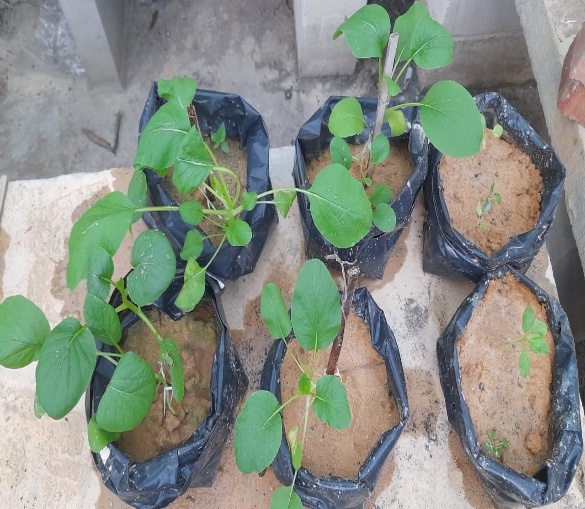
Insect frass offers a sustainable alternative to chemical fertilisers for optimal crop growth. This study evaluated the efficacy of frass from three edible insects, namely Hermetia illucens (black soldier fly), Teleogryllus commodus (black field cricket), and Tenebrio molitor (mealworm), on the growth of Brassica rapa subsp. chinensis, using a feed substrate, broiler small intestine meal (BSIM). A control group of chemical fertilisers was included for comparison in a controlled environment. The physicochemical qualities exhibited substantial variation among the types of frass, reflecting changes in their nutritional composition and fertilisation quality, while chemical fertiliser showed distinct physicochemical properties compared to the frass. Despite the high nutrient profile of T. commodus, H. illucens frass produced the greatest plant growth outcomes. Plants treated with H. illucens frass recorded the highest values for leaf count (10.8 ± 1.3), leaf length (78.12 ± 2.80 mm), leaf width (43.01 ± 1.31 mm), plant height (153.12 ± 4.24 mm), and stem diameter (13.53 ± 0.43 mm). Furthermore, H. illucens promoted the greatest root width (28.55 ± 2.39 mm) and longest root length (48.06 ± 1.00 mm). These results point to the potential of H. illucens as a useful biofertilizer for promoting the growth of Brassica rapa subsp. chinensis.
References
[1] F. Biondi, F. Balducci, F. Capocasa, M. Visciglio, E. Mei, M. Vagnoni, B. Mezzetti & L. Mazzoni, ``Environmental conditions and agronomical factors influencing the levels of phytochemicals in brassica vegetables responsible for nutritional and sensorial properties'', Applied Sciences 11 (2021) 1927. https://doi.org/10.3390/app11041927.
[2] X. Zhang, J. Li, L. Shao, F. Qin, J. Yang, H. Gu, & X. Pan, "Effects of organic fertilizers on yield, soil physico-chemical property, soil microbial community diversity and structure of Brassica rapa var. Chinensis", Frontiers in Microbiology 14 (2023) 1132853. https://doi.org/10.3389/fmicb.2023.1132853.
[3] A. Fathi, ``Role of nitrogen (N) in plant growth, photosynthesis pigments, and N use efficiency: A review'', Agrisost 28 (2022) 1. https://doi.org/10.5281/zenodo.7438164.
[4] R. Munene, E. Changamu, N. Korir & G.-O. Joseph, ``Effect of different nitrogen forms on growth, phenolics, flavonoids, and antioxidant activity in amaranth species'', Tropical Plant Research 4 (2017) 81. https://www.tropicalplantresearch.com/archives/2017/vol4issue1/12.pdf.
[5] D. Agustiyani, R. Agandi, Arinafril, A. A. Nugroho & S. Antonius, ``The effect of application of compost and frass from black soldier fly larvae (Hermetia illucens L.) on growth of pakchoi (Brassica rapa L.)'', IOP Conference Series: Earth and Environmental Science 762 (2021) 012036. https://doi.org/10.1088/1755-1315/762/1/012036.
[6] H. Shaji, V. Chandran & L. Mathew, ``Organic fertilizers as a route to controlled release of nutrients'', in Controlled Release Fertilizers for Sustainable Agriculture, F. B. Lewu, T. Volova, S. Thomas & K. R. Rakhimol (Eds.), Elsevier, 2021, pp. 231--245. https://doi.org/10.1016/B978-0-12-819555-0.00013-3.
[7] J. Poveda, ``Insect frass in the development of sustainable agriculture: A review'', Agronomy for Sustainable Development 41 (2021) 5. https://doi.org/10.1007/s13593-020-00656-x.
[8] A. Mie, H. R. Andersen, S. Gunnarsson, J. Kahl, E. Kesse-Guyot, E. Rembiałkowska, G. Quaglio & P. Grandjean, ``Human health implications of organic food and organic agriculture: A comprehensive review'', Environmental Health 16 (2017) 111. https://doi.org/10.1186/s12940-017-0315-4.
[9] S. Kumar, A. Sharma, V. K. Sharma, K. G. Rosin & D. Kumar, ``Enhancement of apple (Malus domestica) productivity and soil health through organic fertilization and bio-inoculants under north-western Himalayan region of India'', Indian Journal of Agricultural Sciences 88 (2018) 1463. https://doi.org/10.56093/ijas.v88i9.83516.
[10] H. Ilahi, K. Hidayat, M. Adnan, F. ur Rehman, R. Tahir, M. S. Saeed, S. W. A. Shah & M. D. Toor, ``Accentuating the impact of inorganic and organic fertilizers on agriculture crop production: A review'', Indian Journal of Pure & Applied Biosciences 9 (2021) 36. https://doi.org/10.18782/2582-2845.8546.
[11] I. Ullah, M. S. Khan & H. Abu Hasan, ``A review of sustainable solution using black soldier fly larvae and their role in converting organic waste into bio-based resources'', Serangga 30 (2025) 338. https://doi.org/10.17576/serangga-2025-3003-23.
[12] I. Ullah, A. B. A. Khair, M. S. Khan, S. Badshah, E. Ibáñez-Arancibia, M. A. Khan, M. ur Rehman, R. De los Ríos-Escalante, M. Attaullah, & F. Badshah, "Comparative efficacy of black soldier fly (Hermetia illucens) frass derived from animal-based and plant-based wastes on nitrification rate and nitrate uptake in Amaranthus dubius", Journal of Animal and Plant Sciences 36 (2026) 104 https://doi.org/10.36899/JAPS.2026.1.0009.
[13] A. van Huis & D. G. A. B. Oonincx, ``The environmental sustainability of insects as food and feed: A review'', Agronomy for Sustainable Development 37 (2017) 43. https://doi.org/10.1007/s13593-017-0452-8.
[14] H. Kagata & T. Ohgushi, ``Positive and negative impacts of insect frass quality on soil nitrogen availability and plant growth'', Population Ecology 54 (2012) 75. https://doi.org/10.1007/s10144-011-0281-6.
[15] D. Beesigamukama, B. Mochoge, N. K. Korir, K. K. M. Fiaboe, D. Nakimbugwe, F. M. Khamis, S. Subramanian, T. Dubois, M. W. Musyoka, S. Ekesi, S. Kelemu & C. M. Tanga, ``Exploring black soldier fly frass as novel fertilizer for improved growth, yield, and nitrogen use efficiency of maize under field conditions'', Frontiers in Plant Science 11 (2020) 574592. https://doi.org/10.3389/fpls.2020.574592.
[16] E. A. Ferruzca-Campos, A. K. Rico-Chavez, R. G. Guevara-González, M. Urrestarazu, T. P. L. Cunha-Chiamolera, R. Reynoso-Camacho & R. Guzmán-Cruz, ``Biostimulant and elicitor responses to cricket frass (Acheta domesticus) in tomato (Solanum lycopersicum L.) under protected conditions'', Plants 12 (2023) 1327. https://doi.org/10.3390/plants12061327.
[17] D. Houben, G. Daoulas, M.-P. Faucon & A.-M. Dulaurent, ``Potential use of mealworm frass as a fertilizer: Impact on crop growth and soil properties'', Scientific Reports 10 (2020) 4659. https://doi.org/10.1038/s41598-020-61765-x.
[18] J. R. Okalebo, K. W. Gathua & P. L. Woomer, Laboratory Methods of Soil and Plant Analysis: A Working Manual, 2nd ed., SACRED Africa, Nairobi, Kenya, 2002. https://erepository.uonbi.ac.ke/items/cd107167-8d1c-4637-bb14-ed80e640762b.
[19] J. Murphy & J. P. Riley, ``A modified single solution method for the determination of phosphate in natural waters'', Analytica Chimica Acta 27 (1962) 31. https://doi.org/10.1016/S0003-2670(00)88444-5.
[20] S. S. Nielsen, ``Determination of moisture content'', in Food Analysis Laboratory Manual, Springer, New York, USA, 2010, pp. 17--27. https://link.springer.com/chapter/10.1007/978-1-4419-1463-7_3.
[21] D. K. Kundu & J. K. Ladha, ``Efficient management of soil and biologically fixed N$_2$ in intensively-cultivated rice fields'', Soil Biology and Biochemistry 27 (1995) 431. https://doi.org/10.1016/0038-0717(95)98615-U.
[22] A. Khan, M. A. Khan, M. Adnan, I. Ullah, R. Shahzad, H. S. Younas, M. U. Rehman, H. Zheng, S. Tian & M. U. Hassan, ``Carbon sequestration and sustainable soil management'', in Climate Smart Agriculture for Future Food Security, Springer Nature, Singapore, 2025, pp. 37--63. https://doi.org/10.1007/978-981-96-4499-5_2.
[23] E. K. Bünemann, G. Bongiorno, Z. Bai, R. E. Creamer, G. De Deyn, R. De Goede & L. Brussaard, "Soil quality–A critical review", Soil biology and biochemistry 120 (2018) 105. https://doi.org/10.1016/j.soilbio.2018.01.030.
[24] S. J. Leghari, N. A. Wahocho, G. M. Laghari, A. H. Laghari, G. M. Bhabhan, K. H. Talpur, T. A. Bhutto, S. A. Wahocho & A. A. Lashari, ``Role of nitrogen for plant growth and development: A review'', Advances in Environmental Biology 10 (2016) 209. https://www.researchgate.net/publication/309704090_Role_of_Nitrogen_for_Plant_Growth_and_Development_A_review.
[25] C. H. Lalander, J. Fidjeland, S. Diener, S. Eriksson & B. Vinnerås, ``High waste-to-biomass conversion and efficient Salmonella spp. reduction using black soldier fly for waste recycling'', Agronomy for Sustainable Development 35 (2015) 261. https://doi.org/10.1007/s13593-014-0235-4.
[26] H. K. Ravi, A. Degrou, J. Costil, C. Trespeuch, F. Chemat & M. A. Vian, ``Larvae-mediated valorization of industrial, agriculture and food wastes: Biorefinery concept through bioconversion, processes, procedures, and products'', Processes 8 (2020) 857. https://doi.org/10.3390/pr8070857.
[27] T. Ritvanen, H. Pastell, A. Welling & M. Raatikainen, ``The nitrogen-to-protein conversion factor of two cricket species: Acheta domesticus and Gryllus bimaculatus'', Agricultural and Food Science 29 (2020) 1. https://doi.org/10.23986/afsci.89101.
[28] X. Yu, Q. He & D. Wang, ``Dynamic analysis of major components in the different developmental stages of Tenebrio molitor'', Frontiers in Nutrition 8 (2021) 689746. https://doi.org/10.3389/fnut.2021.689746.
[29] M. T. Gebremikael, N. van Wickeren, P. S. Hosseini & S. De Neve, ``The impacts of black soldier fly frass on nitrogen availability, microbial activities, C sequestration, and plant growth'', Frontiers in Sustainable Food Systems 6 (2022) 795950. https://doi.org/10.3389/fsufs.2022.795950.
[30] D. Beesigamukama, S. Subramanian & C. M. Tanga, ``Nutrient quality and maturity status of frass fertilizer from nine edible insects'', Scientific Reports 12 (2022) 7182. https://doi.org/10.1038/s41598-022-11336-z.
[31] E. Favoino & D. Hogg, ``The potential role of compost in reducing greenhouse gases'', Waste Management & Research 26 (2008) 61. https://doi.org/10.1177/0734242X08088584.
[32] L. Setti, E. Francia, A. Pulvirenti, S. Gigliano, M. Zaccardelli, C. Pane, F. Caradonia, S. Bortolini, L. Maistrello & D. Ronga, ``Use of black soldier fly (Hermetia illucens (L.), Diptera: Stratiomyidae) larvae processing residue in peat-based growing media'', Waste Management 95 (2019) 278. https://doi.org/10.1016/j.wasman.2019.06.017.
[33] W. Yamori, "Photosynthesis and respiration", in Plant factory, an indoor vertical farming system for efficient quality food production 2nd ed., Academic Press, 2020, pp. 197–206. https://doi.org/10.1016/B978-0-12-816691-8.00012-1.
[34] C. Wijewardana, A. K. Gonzales, C. M. Vogel & N. E. Martinez, ``17$alpha$-Ethynylestradiol-induced changes in Brassica rapa during the seedling growth stage'', Agrosystems, Geosciences & Environment 5 (2022) e20258. https://doi.org/10.1002/agg2.20258.
[35] H. Poorter, K. J. Niklas, P. B. Reich, J. Oleksyn, P. Poot & L. Mommer, ``Biomass allocation to leaves, stems and roots: Meta-analyses of interspecific variation and environmental control'', New Phytologist 193 (2012) 30. https://nph.onlinelibrary.wiley.com/doi/full/10.1111/j.1469-8137.2011.03952.x.
[36] C. Esteves, P. Fareleira, M. A. Castelo-Branco, I. G. Lopes, M. Mota, D. Murta & R. Menino, ``Black soldier fly larvae frass increases the soil's residual nutrient content and enzymatic activity: A lettuce production trial'', Journal of Insects as Food and Feed 8 (2022) 1431. https://doi.org/10.3920/JIFF2022.0005.
[37] D. Beesigamukama, B. Mochoge, N. K. Korir, K. K. M. Fiaboe, D. Nakimbugwe, F. M. Khamis, S. Subramanian, M. M. Wangu, T. Dubois, S. Ekesi & C. M. Tanga, ``Low-cost technology for recycling agro-industrial waste into nutrient-rich organic fertilizer using black soldier fly'', Waste Management 119 (2021) 183. https://doi.org/10.1016/j.wasman.2020.09.043.
[38] D. P. Bebber & V. R. Richards, ``A meta-analysis of the effect of organic and mineral fertilizers on soil microbial diversity'', Applied Soil Ecology 175 (2022) 104450. https://doi.org/10.1016/j.apsoil.2022.104450.
Published
How to Cite
Issue
Section
Copyright (c) 2026 Ikram Ullah, Hadura Abu Hasan

This work is licensed under a Creative Commons Attribution 4.0 International License.