
Identification and characterization of Ganoderma enigmaticum, Ganoderma casuarinicola, and Polyporus thailandensis to fabricate mycelium-based composites

Authors

  • Sesan Abiodun Aransiola
    Department of Microbiology, Faculty of Life Sciences, University of Abuja, PMB 117, Abuja, Nigeria
  • Ajogwu Anthony Adige
    Department of Microbiology, Faculty of Life Sciences, University of Abuja, PMB 117, Abuja, Nigeria
  • Ojonoma Loretta Okwute
    Department of Microbiology, Faculty of Life Sciences, University of Abuja, PMB 117, Abuja, Nigeria
  • Salamatu S. Machunga-Mambula
    Department of Microbiology, Faculty of Life Sciences, University of Abuja, PMB 117, Abuja, Nigeria
  • Bukola Catherine Akin-Osanaiye
    Department of Biochemistry, Faculty of Life Sciences, University of Abuja, PMB 117, Abuja, Nigeria

Keywords:

Lignocellulose, Mycelium-based composites, Biodegradable materials, Synthetic plastics, Packaging

Abstract

Mycelium-based composites (MBCs) are biodegradable materials produced from fungal species grown on lignocellulosic residues. These composites have characteristics that could replace synthetic plastics used for packaging by different manufacturing companies. In this study, three fungal species (Ganoderma enigmaticum, Ganoderma casuarinicola, and Polyporus thailandensis) were isolated and characterized morphologically. Polymerase chain reaction (PCR) was used to amplify the internal transcribed spacer (ITS) region of the fungal isolates using the Qiagen TopTaq Master Mix Kit (Qiagen, Hilden, Germany). Two of the three fungi (G. enigmaticum and P. thailandensis) were grown on lignocellulosic residues (sawdust and cornhusk) to fabricate MBCs. Some physical properties of the MBCs were analyzed, and the results showed that the substrate type and fungal species affected the properties of the MBCs produced. MBCs obtained from G. enigmaticum exhibited better physical properties than those obtained from P. thailandensis. Moisture contents were 60.03 and 63.24%, and densities were 110.11 and 121.13 kg/m3 for G. enigmaticum and P. thailandensis, respectively. Water absorption was highest in MBCs produced by P. thailandensis (136%) compared with MBCs produced by G. enigmaticum (106%). With respect to substrate combinations, MBCs produced from combined substrates had improved physical properties, including higher density and lower water absorption and moisture content.
Dimensions

[1] V. Meyer, E. Y. Basenko, J. P. Benz, G. H. Braus, M. X. Caddick, M. Csukai, R. P. de Vries, D. Endy, J. C. Frisvad & N. Gunde-Cimerman, ``Growing a circular economy with fungal biotechnology: A white paper'', Fungal Biology and Biotechnology 7 (2020) 5. https://doi.org/10.1186/s40694-020-00095-z.

[2] A. Ghazvinian, P. Farrokhsiar, F. Vieira, J. Pecchia & B. Gursoy, ``Mycelium-based biocomposites for architecture: Assessing the effects of cultivation factors on compressive strength'', eCAADe/SIGraDi Proceedings 2 (2019) 505. https://doi.org/10.52842/conf.ecaade.2019.2.505.

[3] B. R. Babaniyi, S. A. Aransiola, G. G. Babaniyi & N. R. Maddela (Eds.), Environmental Footprint of Bioplastic Additives, CRC Press, Boca Raton, USA, 2025. https://doi.org/10.1201/9781003602828.

[4] E. Karana, D. Blauwhoff, E. J. Hultink & S. Camere, ``When the material grows: A case study on designing with mycelium-based materials'', International Journal of Design 12 (2018) 119. Available online: https://www.ijdesign.org/index.php/IJDesign/article/view/2918.

[5] E. Elsacker, A. Søndergaard, A. van Wylick, E. Peeters & L. de Laet, ``Growing living and multifunctional mycelium composites for large-scale formwork applications using robotic abrasive wire-cutting'', Construction and Building Materials 283 (2021) 122732. https://doi.org/10.1016/j.conbuildmat.2021.122732.

[6] C. Singh, P. Pathak, N. Chaudhary, A. Rathi & D. Vyas, ``Ganoderma lucidum: Cultivation and production of ganoderic and lucidenic acid'', 2021. Available online: https://www.researchgate.net/publication/350240570.

[7] G. Adotey, R. N. Alolga, A. Quarcoo, P. Yerenkyi, P. Otu, A. K. Anang, L. K. N. Okine, W. S. K. Gbewonyo, J. C. Holliday & V. C. Lombardi, ``Molecular identification and characterization of five Ganoderma species from the Lower Volta River Basin of Ghana based on nuclear ribosomal DNA sequences'', Journal of Fungi 10 (2024) 6. https://doi.org/10.3390/jof10010006.

[8] R.-L. Zhao & Y.-M. He, ``Network pharmacology analysis of the anti-cancer pharmacological mechanisms of Ganoderma lucidum extract with experimental support using Hepa1-6-bearing C57 BL/6 mice'', Journal of Ethnopharmacology 210 (2018) 287. https://doi.org/10.1016/j.jep.2017.08.041.

[9] F. V. W. Appels, S. Camere, M. Montalti, E. Karana, K. M. B. Jansen, J. Dijksterhuis, P. Krijgsheld & H. A. B. Wösten, ``Fabrication factors influencing mechanical, moisture- and water-related properties of mycelium-based composites'', Materials & Design 161 (2019) 64. https://doi.org/10.1016/j.matdes.2018.11.027.

[10] L. N. Ofodile, O. S. Isikhuemhen, F. N. Anike & A. A. Adekunle, ``The domestication and cultivation of Ganoderma medicinal mushroom species from Nigeria'', International Journal of Medicinal Mushrooms 24 (2022) 69. https://doi.org/10.1615/IntJMedMushrooms.2022043906.

[11] D. Darwana, M. R. M. Rakib & M. B. Jalloh, ``Characterisation and identification of polypore fungi collected from forests in Sandakan, Sabah based on the macro- and micro-morphology'', Transactions on Science and Technology 6 (2019) 283. https://www.researchgate.net/publication/335485002_Characterization_and_identification_of_polypore_fungi_collected_from_forests_in_Sandakan_Sabah_based_on_the_macro-and_micro-_morphology.

[12] N. B. Shilpa & S. M. Sumer, ``Microbial biodegradation of plastics: Challenges, opportunities, and a critical perspective'', Frontiers of Environmental Science & Engineering 16 (2022) 161. https://doi.org/10.1007/s11783-022-1596-6.

[13] I. O. Musa, H. S. Auta, U. S. Ilyasu, S. A. Aransiola, H. A. Makun, N. U. Adabara, O. P. Abioye, A. Aziz, B. Jayanthi, N. R. Maddela & R. Prasad, ``Micro and nanoplastics in environment: Degradation, detection, ecological impact'', International Journal of Environmental Research 18 (2024) 1. https://doi.org/10.1007/s41742-023-00551-9.

[14] S. A. Aransiola, M. O. Victor-Ekwebelem, B. X. Daza, P. O. Oladoye, Y. A. Alli, A. Bamisaye, A. B. Aransiola, S. O. Oni & N. R. Maddela, ``Micro- and nano-plastics pollution in the marine environment: Progresses, drawbacks and future guidelines'', Chemosphere 374 (2025) 144211. https://doi.org/10.1016/j.chemosphere.2025.144211.

[15] H. S. Auta, I. O. Musa, S. A. Aransiola, H. A. Makun, A. Hassan, U. J. J. Ijah, D. O. Aboyeji, S. H. Fauziah, N. R. Maddela & R. Prasad, ``Microplastics distribution in the soil: A review'', Asian Journal of Water, Environment and Pollution (2026) 025310243. https://doi.org/10.36922/AJWEP025310243.

[16] Z. A. Elahi, D. A. Bukhari, S. Shamim & A. Rehman, ``Plastics degradation by microbes: A sustainable approach'', Journal of King Saud University -- Science 33 (2021) 101538. https://doi.org/10.1016/j.jksus.2021.101538.

[17] K. K. Alaneme, J. U. Anaele, T. M. Oke, S. A. Kareem, M. Adediran, O. A. Ajibuwa & Y. O. Anabaranze, ``Mycelium-based composites: A review of their bio-fabrication procedures, material properties and potential for green building and construction applications'', Alexandria Engineering Journal 83 (2023) 234. https://doi.org/10.1016/j.aej.2023.10.012.

[18] J. Zheng, P. Dhevagi, S. A. Aransiola, S. Iqbal & Y. Wang, ``Editorial: Effects of microplastics on soil ecosystem'', Frontiers in Microbiology 16 (2025) 1686836. https://doi.org/10.3389/fmicb.2025.1686836.

[19] N. Attias, O. Danai, N. Ezov, E. Tarazi & Y. J. Grobman, Developing novel applications of mycelium-based biocomposite materials for design and architecture, Building with Bio-based Materials: Best Practice and Performance Specification, Zagreb, Croatia, 2019, pp. 1--10. Available online: https://cris.technion.ac.il/en/publications/developing-novel-applications-of-mycelium-based-bio-composite-mat/.

[20] I. S. E. Ueitele, N. P. Kadhila-Muanding & N. Matundu, ``Evaluating the production of Ganoderma mushroom on corn cobs'', African Journal of Biotechnology 13 (2014) 2215. Available online: https://academicjournals.org/journal/AJB/article-full-text-pdf/7A4CFE944898.pdf.

[21] M. H. Rashid, K. Akhter, M. S. M. Chowdhury & F. M. Aminuzzaman, ``Biodiversity, habitat and morphology of mushroom of different forest regions of Bangladesh'', International Journal of Advanced Research 5 (2017) 945. https://doi.org/10.21474/IJAR01/5408.

[22] B. T. T. Nguyen, N. X. Ngo, V. V. Le, L. T. Nguyen, R. Kana & H. D. Nguyen, ``Optimal culture conditions for mycelial growth and fruiting body formation of Lingzhi mushroom Ganoderma lucidum strain GA3'', Vietnam Journal of Science, Technology and Engineering 61 (2019) 62. https://doi.org/10.31276/VJSTE.61(1).62-67.

[23] Y. Yajima, M. Miyazaki, N. Okita & T. Hoshino, ``Production of ginkgo leaf-shaped basidiocarps of the Lingzhi or Reishi medicinal mushroom Ganoderma lucidum, containing high levels of alpha- and beta-D-glucan and ganoderic acid A'', International Journal of Medicinal Mushrooms 15 (2013) 175. Available online: https://pubmed.ncbi.nlm.nih.gov/23557369/.

[24] W. Aiduang, J. Kumla, S. Srinuanpan, W. Thamjaree, S. Lumyong & N. Suwannarach, ``Mechanical, physical, and chemical properties of mycelium-based composites produced from various lignocellulosic residues and fungal species'', Journal of Fungi 8 (2022) 1125. https://doi.org/10.3390/jof8111125.

[25] A. O. Salami, F. A. Bankole & O. I. Olawole, ``Effect of different substrates on the growth and protein content of oyster mushroom (Pleurotus florida)'', International Journal of Biological and Chemical Sciences 10 (2016) 475. https://doi.org/10.4314/ijbcs.v10i2.2.

[26] C. Kupradi, C. Khongla, S. Musika, A. Ranok, K. Tamaruay, J. Woraratphoka & S. Mangkalanan, ``Cultivation of Lentinus squarrosulus and Pleurotus ostreatus on cassava bagasse-based substrates'', International Journal of Agricultural Technology 13 (2017) 883. Available online: https://docslib.org/doc/5297312/cultivation-of-lentinus-squarrosulus-and-pleurotus-ostreatus-on-cassava-bagasse-based-substrates.

[27] A. A. Hassan & A. R. M. Al-Qiassi, ``Isolation of the medicinal mushroom Ganoderma resinaceum in Iraq, morphological, molecular identification and production of basidiocarps on novel media'', Trends in Sciences 19 (2022) 4949. https://doi.org/10.48048/tis.2022.4949.

[28] H. Huiping, L. Yuanchao, L. Xiaowei, L. Xiangmin, M. Weipeng, X. Yizhen, Z. Zhi & W. Qingping, ``Artificial cultivation and anti-tumor activity of Ganoderma mbrekobenum'', Sains Malaysiana 50 (2021) 723. https://doi.org/10.17576/jsm-2021-5003-14.

[29] D. Bai, N.-T. Chang, D.-H. Li, J.-X. Liu & X.-Y. You, ``Antiblastic activity of Ganoderma lucidum polysaccharides'', Acta Agriculturae Boreali-Sinica 23 (2018) 282. https://doi.org/10.7668/hbnxb.2008.S1.065.

[30] V. Fryssouli, G. Zervakis, E. Polemis & M. A. Typas, ``A global meta-analysis of ITS rDNA sequences from material belonging to the genus Ganoderma including new data from selected taxa'', MycoKeys 75 (2020) 71. https://doi.org/10.3897/mycokeys.75.59872.

[31] A. Yangchum, R. Fujii, W. Choowong, P. Rachtawee, M. Pobkwamsuk, T. Boonpratuang, S. Mori & M. Isaka, ``Lanostane triterpenoids from cultivated fruiting bodies of basidiomycete Ganoderma mbrekobenum'', Phytochemistry 196 (2022) 113075. https://doi.org/10.1016/j.phytochem.2021.113075.

[32] A. Kumar & A. Bharmoria, ``Ganoderma lucidum: A traditional Chinese medicine used for curing tumors'', International Journal of Pharmacy and Pharmaceutical Sciences 13 (2021) 1. https://doi.org/10.22159/ijpps.2021v13i3.40614.

[33] L. Gou, S. Li, J. Yin, T. Li & X. Liu, ``Morphological and physico-mechanical properties of mycelium biocomposites with natural reinforcement particles'', Construction and Building Materials 304 (2021) 124656. https://doi.org/10.1016/j.conbuildmat.2021.124656.

[34] P. M. Velasco, M. P. M. Ortiz, M. A. M. Giro, M. C. J. Castelló & L. M. Velasco, ``Development of better insulation bricks by adding mushroom compost wastes'', Energy and Buildings 80 (2014) 17. https://doi.org/10.1016/j.enbuild.2014.05.005.

[35] C. Girometta, A. M. Picco, R. M. Baiguera, D. Dondi, S. Babbini, M. Cartabia, M. Pellegrini & E. Savino, ``Physico-mechanical and thermodynamic properties of mycelium-based biocomposites: A review'', Sustainability 11 (2019) 281. https://doi.org/10.3390/su11010281.

[36] C. Bruscato, E. Malvessi, R. N. Brandalise & M. Camassola, ``High performance of macrofungi in the production of mycelium-based biofoams using sawdust: Sustainable technology for waste reduction'', Journal of Cleaner Production 234 (2019) 225. https://doi.org/10.1016/j.jclepro.2019.06.150.

[37] X. Y. Chan, N. Saeidi, A. Javadian, D. E. Hebel & M. Gupta, ``Mechanical properties of dense mycelium-bound composites under accelerated tropical weathering conditions'', Scientific Reports 11 (2021) 22112. https://doi.org/10.1038/s41598-021-01598-4.

[38] Z. Tacer-Caba, J. J. Varis, P. Lankinen & K. S. Mikkonen, ``Comparison of novel fungal mycelia strains and sustainable growth substrates to produce humidity-resistant biocomposites'', Materials & Design 192 (2020) 108728. https://doi.org/10.1016/j.matdes.2020.108728.

[39] A. Gumowska, E. Robles & G. Kowaluk, ``Evaluation of functional features of lignocellulosic particle composites containing biopolymer binders'', Materials 14 (2021) 7718. https://doi.org/10.3390/ma14247718.

[40] S. Manan, M. W. Ullah, M. Ul-Islam, O. M. Atta & G. Yang, ``Synthesis and applications of fungal mycelium-based advanced functional materials'', Journal of Bioresources and Bioproducts 6 (2021) 1. https://doi.org/10.1016/j.jobab.2021.01.001.

[41] L. Yang, D. Park & Z. Qin, ``Material function of mycelium-based biocomposite: A review'', Frontiers in Materials 8 (2021) 737377. https://doi.org/10.3389/fmats.2021.737377.

[42] O. Abdelhady, E. Spyridonos & H. Dahy, ``Bio-modules: Mycelium-based composites forming a modular interlocking system through a computational design towards sustainable architecture'', Designs 7 (2023) 20. https://doi.org/10.3390/designs7010020.

[43] G. Bagheriehnajjar, H. Yousefpour & M. Rahimnejad, ``Environmental impacts of mycelium-based biocomposite construction materials'', International Journal of Environmental Science and Technology 21 (2024) 5437. https://doi.org/10.1007/s13762-023-05447-x.

[44] P. Jinanukul, J. Kumla, W. Aiduang, W. Thamjaree, R. Oranratmanee, U. Shummadtayar, Y. Tongtuam, S. Lumyong, N. Suwannarach & T. Waroonkun, ``Comparative evaluation of mechanical and physical properties of mycelium composite boards made from Lentinus sajor-caju with various ratios of corn husk and sawdust'', Journal of Fungi 10 (2024) 634. https://doi.org/10.3390/jof10090634.

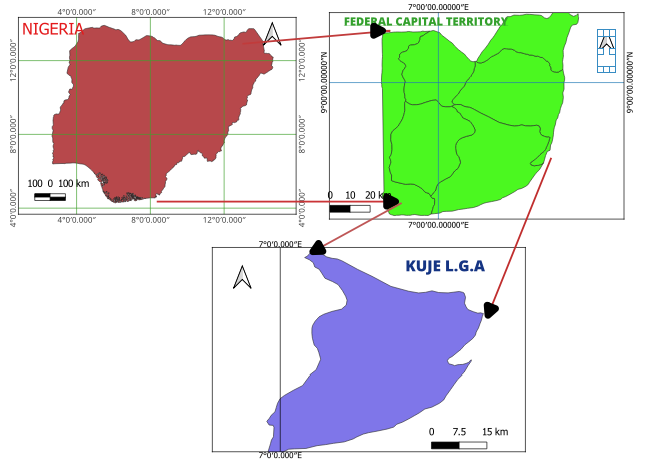
FIG1

Published

2026-09-15

How to Cite

Identification and characterization of Ganoderma enigmaticum, Ganoderma casuarinicola, and Polyporus thailandensis to fabricate mycelium-based composites. (2026). African Scientific Reports, 5(3), 555. https://doi.org/10.46481/asr.2026.5.3.555

Issue

Section

BIOLOGICAL SCIENCES SECTION

How to Cite

Identification and characterization of Ganoderma enigmaticum, Ganoderma casuarinicola, and Polyporus thailandensis to fabricate mycelium-based composites. (2026). African Scientific Reports, 5(3), 555. https://doi.org/10.46481/asr.2026.5.3.555

Similar Articles

11-20 of 51

You may also start an advanced similarity search for this article.