
Physio-chemical properties of Tamiya clay deposit for production of insulating refractory bricks using mixture of rice husk and waste paper as additive
Keywords:
Tamiya clay, Rice husk, Waste paper, Thermal conductivity, PorosityAbstract
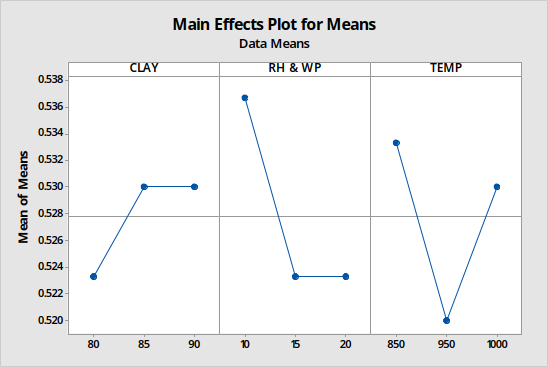
The study aimed at investigating impact of the processing parameters on the physico-chemical and mechanical properties of insulating refractory bricks made from Tamiya clay with admixture of rice-husk/paper-waste. The molding was done with a compression hydraulic press. The molding of the bricks was done by incorporating the varied proportions of the additive of the mixture of rice-husk/paper-waste (10%, 15% 20wt %) into the clay matrix. The firing temperature varied from 850oC, 950oC, 1000oC. The results were optimized using Taguchi design of experiment method and the effect of the processing parameters (clay, additive, firing temperature) was established using the response Table and means effects plots. The properties of the produced bricks investigated after firing at 850oC, 950oC and 1000oC indicated that samples of mixture of rice husk and waste paper had percentage total apparent porosity increment ranging from 15.90%, - 26.1%. Similarly, samples of the bricks had cold crushing strength ranging from 2.04 MN/m2 – 3.45 MN/m2. The estimated refractoriness using Shuen’s formula revealed 1554.612°C as a range of refractoriness while the result of the refractoriness using Pyrometric Cone Equivalent (PCE) indicated that samples had refractoriness of 1200°C. On the other hand, thermal insulation improved from 1.759531Wmk to 0.51WmK. Taguchi-based optimization experiment identified Tamiya clay content and temperature as the most considerable factors affecting the cold crushing strength. However, mixture of rice husk and waste paper and temperature are significant parameters influencing thermal conductivity.
References
[1] A. R. Chesti, Refractories: manufacture, properties, and applications, Prentice Hall, 1986. https://books.google.com.ng/books/about/Refractories.html?id=UHFCAAAAIAAJ&rediresc=y.
[2] A. S. Obadina, A. Jimoh & B. O. Adewuyi, “Characterization of some Nigerian clays for use in foundry operations”, Leonardo Electronic Journal of Practices and Technologies 15 (2016) 1. https://www.lejpt.academicdirect.org/A15/001014.pdf.
[3] A. K. Singh & A. K. Sharma, “Thermal conductivity of fireclay bricks”, Journal of Materials Science 46 (2011) 3530. https://doi.org/10.1007/s10853-011-5195-7.
[4] C. A. Onyebuchi, S. U. Ofoegbu & C. I. Okoro, “Sustainable utilization of agro-industrial wastes in building materials: a review”, Journal of Cleaner Production 263 (2020) 121561. https://doi.org/10.1016/j.jclepro.2020.121561.
[5] S. Mohanty, R. N. P. Choudhary & D. Sarangi, “Development of lightweight insulating bricks with agricultural waste”, Materials Today: Proceedings 5 (2018) 2446. https://doi.org/10.1016/j.matpr.2017.11.026.
[6] M. A. Rashid, “Thermal insulation and physical properties of refractory bricks containing rice husk ash”, Journal of Building Engineering 43 (2022) 103339. https://doi.org/10.1016/j.jobe.2021.103339.
[7] S. Jumat & M. Rahman, “Thermal and mechanical properties of clay-rice husk-paper waste insulation bricks”, Construction and Building Materials 274 (2020) 121909. https://doi.org/10.1016/j.conbuildmat.2020.121909.
[8] O. A. Olasupo & J. O. Borode, “Development of insulating refractory ramming mass from some Nigerian refractory raw materials”, Journal of Minerals & Materials Characterization & Engineering 8 (2009) 667.
[9] L. Wang, Y. Zhao & L. Zhang, “The role of stishovite in water transportation in the deep Earth”, Solid Earth Discussions 15 (2024) 215. https://doi.org/10.5194/se-15-215-2024.
[10] D. D. L. Chung, “Acid aluminum phosphate for the binding and coating of materials”, Journal of Materials Science 38 (2003) 2785. https://doi.org/10.1023/A:1024468223425.
[11] M. Abubakar, I. O. Sylvia & H. Abubakar, “Investigating the potentials of Jalingo clay for industrial use”, International Journal of Engineering Research & Technology (IJERT) 5 (2016) 444. https://www.ijert.org/research/investigating-the-potentials-of-jalingo-clay-for-industrial-uses-IJERTV5IS060492.pdf.
[12] E. E. Nnuka & U. J. E. Agbo, “Evaluation of the refractory characteristics of Otukpo clay deposit”, NSE Technical Transaction 34 (2000) 32.
[13] J. Sutas, A. Manab & L. Pitak, “Effect of rice husk and rice husk ash to properties of bricks”, Procedia Engineering 32 (2012) 1061. https://doi.org/10.1016/j.proeng.2012.02.059.
[14] O. O. Eugenia, E. M. Henry & O. A. Arhuere, “The study of insulating properties of refractory bricks produced using melon seed husks as pore former”, Kufa Journal of Engineering 15 (2024) 61. https://doi.org/10.36322/kje.2024.15.2.5.
Published
How to Cite
Issue
Section
Copyright (c) 2025 Rayyan Mamuda Dodo, Godwin Joshua, Terver Ause, Zahradeen Musa, Kamilu Bello Adeyemi, Jimoh Gaminana Ohinoyi, Ibrahim Abubakar Ibrahim

This work is licensed under a Creative Commons Attribution 4.0 International License.